
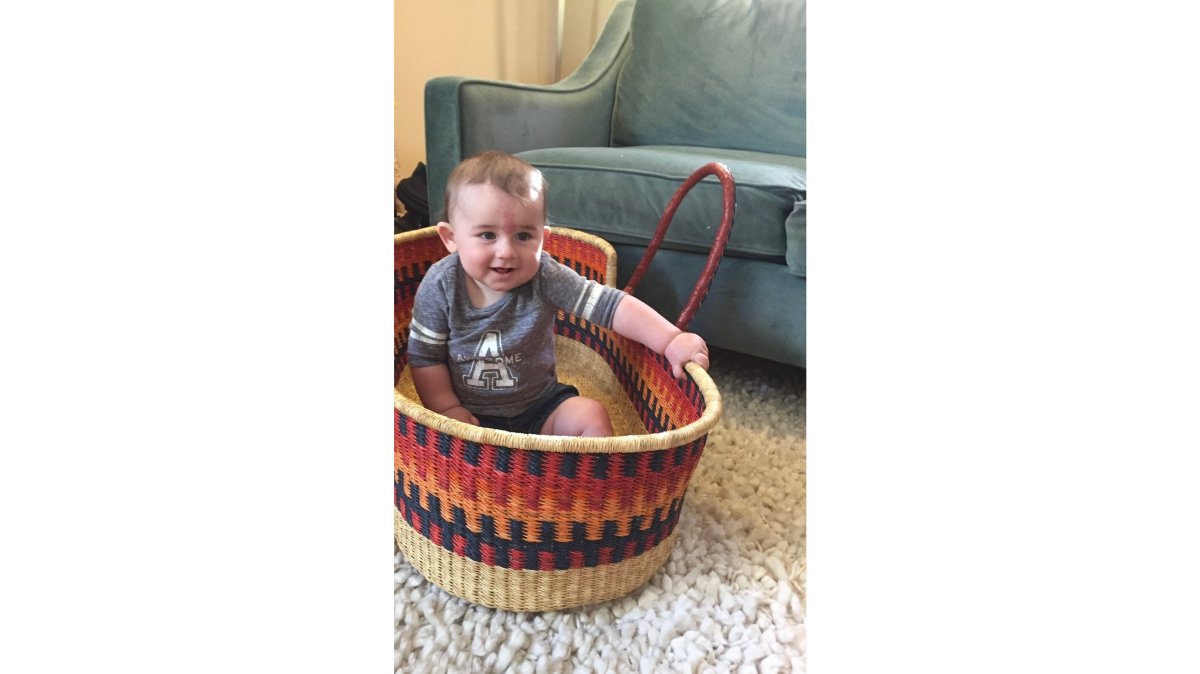
How to Choose a Moses Basket: A Guide for New Parents
Table of Contents
- What Is a Moses Basket and Who It's For
- Moses Basket Safety: What Every Parent Should Know
- Understanding Moses Basket Mattress Size and Fit
- How Long Can a Baby Sleep in a Moses Basket
- Moses Basket vs Bassinet: Which Sleep Space Is Right for You
- Choosing the Right Materials and Construction
- Portability, Stands, and Placement Considerations
- How to Choose a Moses Basket You'll Love for Years
- Frequently Asked Questions
Last Updated: October 21, 2026
What Is a Moses Basket and Who It's For
Understanding how to choose a Moses basket starts with knowing that a Moses basket is a portable, lightweight sleep space for newborns and young infants. It's a woven basket with sturdy handles that lets you keep your baby close while moving freely around your home, and its cozy, confined feel mimics the security of the womb.
Moses baskets aren't for every family, and that's okay. They work best if you plan to move your baby between rooms during the day, want a sleep space more intimate than a traditional crib, or love the look of handcrafted natural materials in your nursery.
Styles vary, some with hoods for extra coziness, others open-top, but all share simplicity: no electronics, no complicated assembly, just a beautiful vessel for sleep. At Plum+Sparrow, our handwoven Moses baskets are crafted by skilled artisans in Ghana using natural elephant grass, creating functional, heirloom-quality pieces you can pass down or repurpose for storage as your children grow.

Moses Basket Safety: What Every Parent Should Know
Safety is the foundation of every good sleep choice. When considering a Moses basket, focus on three core areas: stability, mattress support, and placement.

Stability and placement matter most. Your basket should sit on a flat, sturdy surface, never on a bed, couch, or elevated furniture where it could tip or fall. If you're using a stand, make sure it's designed for your basket and won't wobble. The basket itself should feel solid when you gently press on the sides.
The mattress needs to be firm and properly fitted. A soft mattress increases suffocation risk (ncbi.nlm.nih.gov). Your basket's mattress should fit snugly with no gaps where a baby's face could become wedged, sit flat, and support your newborn evenly. Avoid pillows, blankets, or bumpers inside the basket, and keep the sleep space bare except for a fitted sheet.
Ventilation is important. The woven sides naturally allow airflow, one of the basket's safety advantages over enclosed sleep spaces, helping prevent carbon dioxide rebreathing.
Understanding Moses Basket Mattress Size and Fit
The mattress is where your baby actually sleeps, so getting it right matters. A properly fitted mattress is snug enough that you can't slip more than a finger between the mattress edge and the basket wall, preventing your baby from rolling into gaps or becoming trapped.
Moses baskets typically measure approximately 28-29 inches long and 15-16 inches wide inside. Your mattress should match these dimensions exactly: too small and gaps appear, too large and it bunches up or creates lumps that affect support.
Firmness is non-negotiable. Press your hand into the mattress; it should feel supportive, almost resistant to pressure, and you shouldn't easily sink your fingers deep into it. A firm surface supports your newborn's developing spine and reduces suffocation risk.
Many Moses baskets come with a custom-fitted mattress included, which takes the guesswork out. If buying separately, verify the dimensions before purchasing. Some families add a waterproof mattress cover underneath a fitted sheet for easy cleanup.
How Long Can a Baby Sleep in a Moses Basket
Most babies outgrow a Moses basket between three and four months of age. It isn't a hard cutoff, but it's when babies typically start sitting up or rolling over, making a more spacious sleep environment necessary for safety and comfort.

Watch for these transition signs:
- Your baby can roll from back to side consistently
- Your baby is pushing up on their arms or attempting to sit up
- Your baby seems cramped or uncomfortable in the confined space
- Your baby's length is approaching the basket's limits
Some babies transition earlier if they're larger or more active, while smaller babies might comfortably use a basket a bit longer. Watch your individual baby's development, not just the calendar.
This short window is exactly why many families love Moses baskets: you're not making a huge commitment for a sleep space your baby will use for years. And once your baby outgrows it, the basket doesn't disappear. Many parents repurpose it for storage, blankets, toys, or books, or pass it to a younger sibling or friend, which is part of what makes a quality, handcrafted basket such a smart choice.
Moses Basket vs Bassinet: Which Sleep Space Is Right for You
The choice between a Moses basket and a bassinet often comes down to lifestyle, aesthetics, and how you plan to use the sleep space.
Moses baskets are portable and lightweight, easy to carry from room to room with sturdy handles, with a naturally cozy, confined feel many newborns love. They're also visually beautiful, a handcrafted basket becomes part of your nursery decor, not just functional furniture.
Bassinets are larger and more structured, often on legs or a frame. Many have wheels, though they're bulkier to move than a basket, and some rock or vibrate, features Moses baskets don't offer.
Cradles are smaller than bassinets and rock gently, creating a soothing motion some babies prefer. They're less portable than Moses baskets but offer that rocking feature.
Co-sleepers attach directly to your bed, keeping your baby at your level for easy nighttime feeding and monitoring. They're excellent for parents practicing safe co-sleeping but require a compatible bed frame.
Your choice depends on what matters most. If portability, aesthetics, and a cozy feel are priorities, a Moses basket wins. If you want longer use, storage, or built-in features like rocking, a bassinet might be better.
Sleep Space |
Portability |
Duration |
Aesthetics |
Best For |
|---|---|---|---|---|
Moses Basket |
Highly portable |
3-4 months |
Beautiful, natural |
Families wanting mobility and design |
Bassinet |
Moderate (wheels available) |
4-6 months |
Functional, clinical |
Longer use, storage needs |
Cradle |
Moderate |
3-4 months |
Decorative |
Families wanting gentle rocking |
Co-sleeper |
Not portable |
4-6 months |
Varies |
Safe bed-sharing preference |
Choosing the Right Materials and Construction
What your basket is made of affects durability, safety, aesthetics, and how long it lasts through multiple children.
Natural woven materials like elephant grass, palm leaves, or water hyacinth are breathable, lightweight, and beautiful, allowing air circulation that supports safe sleep. They're sustainable and often handcrafted, making each basket unique.
Avoid baskets treated with harsh chemicals or fire retardants. Your newborn's skin is sensitive, and chemical exposure isn't necessary. Look for baskets that are free from chemical treatments and made from untreated natural materials.
Construction quality matters for longevity. Examine the weaving closely: are the stitches tight and even? Do the handles feel sturdy when you lift the basket? Does the rim feel reinforced? A well-constructed basket can be passed down through multiple children and repurposed for storage; a poorly made one might fall apart after a year or two.
Color and finish affect how the basket looks in your nursery. Natural, undyed materials create a warm, neutral aesthetic that works with any decor style. Some baskets are dyed or have leather accents. Choose what resonates with your vision for your nursery space.
:::pro tip When examining a basket's construction, check the handles. Sturdy, well-stitched handles are a sign of quality craftsmanship. Handles that feel thin or loosely attached suggest the basket won't hold up well over time.
Portability, Stands, and Placement Considerations
One of the biggest advantages of a Moses basket is portability. Sturdy handles let you move your baby from bedroom to living room during the day, keeping them close while you work, spend time with older siblings, or go about your routine.
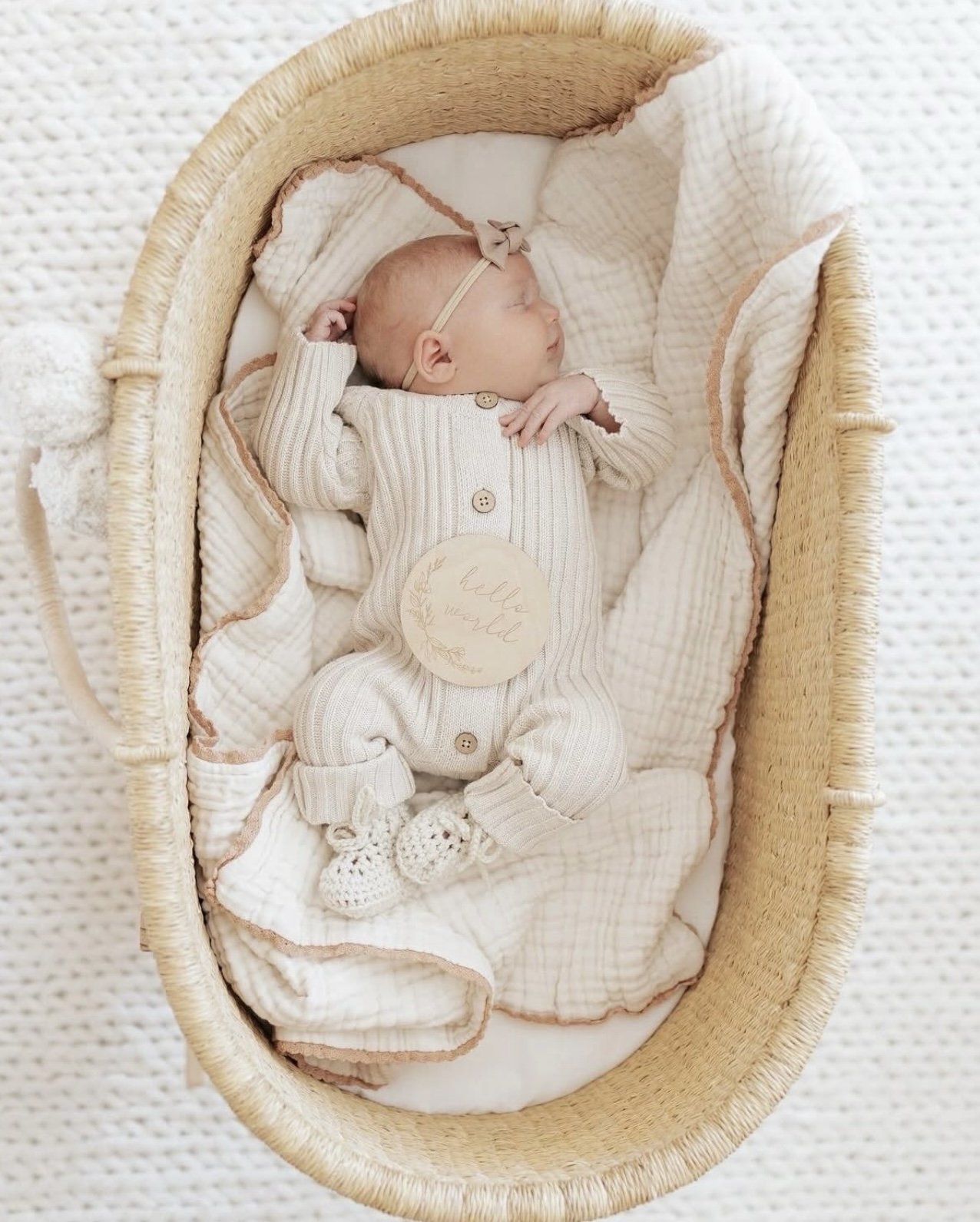
Placement is crucial. Your basket needs a stable, flat surface. A dedicated stand designed for your basket is ideal: it keeps the basket at a comfortable height without bending and prevents tipping.
Without a stand, place your basket directly on the floor. Never place it on a bed, couch, or changing table, since falls from height are dangerous. If you move your basket frequently between rooms, do not carry it with your newborn inside.
Consider your home's layout. Place the basket where you'll spend most of your time with your baby. If you have stairs, a basket on the ground floor may be more practical than carrying it up and down, and natural materials handle different climates differently, so think about your specific environment.
How to Choose a Moses Basket You'll Love for Years
Choosing the right Moses basket means thinking beyond the first few months.
Start with your lifestyle. How much will you move the basket around? If portability is essential, prioritize lightweight construction and comfortable handles; if it stays mostly in one room, weight matters less.
Assess your aesthetic. A Moses basket often sits as a focal point in your nursery. Natural woven baskets work with almost any style, but some families prefer specific colors or finishes.
Verify the mattress. The mattress should be firm, properly fitted, and included with the basket or readily available.
Check the craftsmanship. Look at the weaving, stitching, handles, and overall construction. A well-made basket feels solid and looks beautiful, an investment in something that will last.
Consider your timeline. You'll use this basket for roughly three to four months as a primary sleep space, then store it, pass it to another family, or repurpose it.
Choosing a Moses basket is about more than finding a place for your baby to sleep.
Frequently Asked Questions
What should I look for when buying a Moses basket?
When choosing a Moses basket, prioritize a firm, flat mattress that fits snugly inside the basket with no gaps. Check that the basket is made from natural, untreated materials like elephant grass or palm leaves, free from chemical treatments. Verify sturdy handles that support the basket's weight safely, and confirm the mattress dimensions match the basket size. Look for baskets handmade by skilled artisans using traditional weaving methods, which ensures quality and durability that can last through multiple children.
How do you choose a safe Moses basket?
Safety starts with a firm sleep surface and proper mattress fit. Ensure the basket has no gaps between the mattress and sides where a baby could become trapped. The basket should be placed on a stable, flat surface or secure stand that won't tip over. Choose baskets made without fire retardants or chemical treatments, and keep the sleep space clear of pillows, blankets, or bumpers. Always follow safe sleep guidelines: place your baby on their back, and avoid co-sleeping in the basket itself.
How long can a baby sleep in a Moses basket?
Babies can use a Moses basket from birth until they begin to sit up or roll over unaided, typically around three to four months. Once your baby shows signs of increased mobility or outgrows the basket's weight limit, transition to a larger sleep space like a crib or bassinet. The compact, cozy design of a Moses basket is ideal for the early newborn stage when your baby needs frequent feeding and close proximity during the night.
Is a Moses basket or bassinet better for a newborn?
Both Moses baskets and bassinets work well for newborns, but they serve different needs. Moses baskets are lightweight and portable, allowing you to move your baby between rooms easily, and their natural woven design creates a cozy, womb-like environment. Bassinets are typically larger and may offer more storage space underneath. Choose a Moses basket if portability and aesthetic appeal matter to you; choose a bassinet if you prefer a stationary sleep space with extra storage and a longer usable period.

Leave a comment
This site is protected by hCaptcha and the hCaptcha Privacy Policy and Terms of Service apply.