
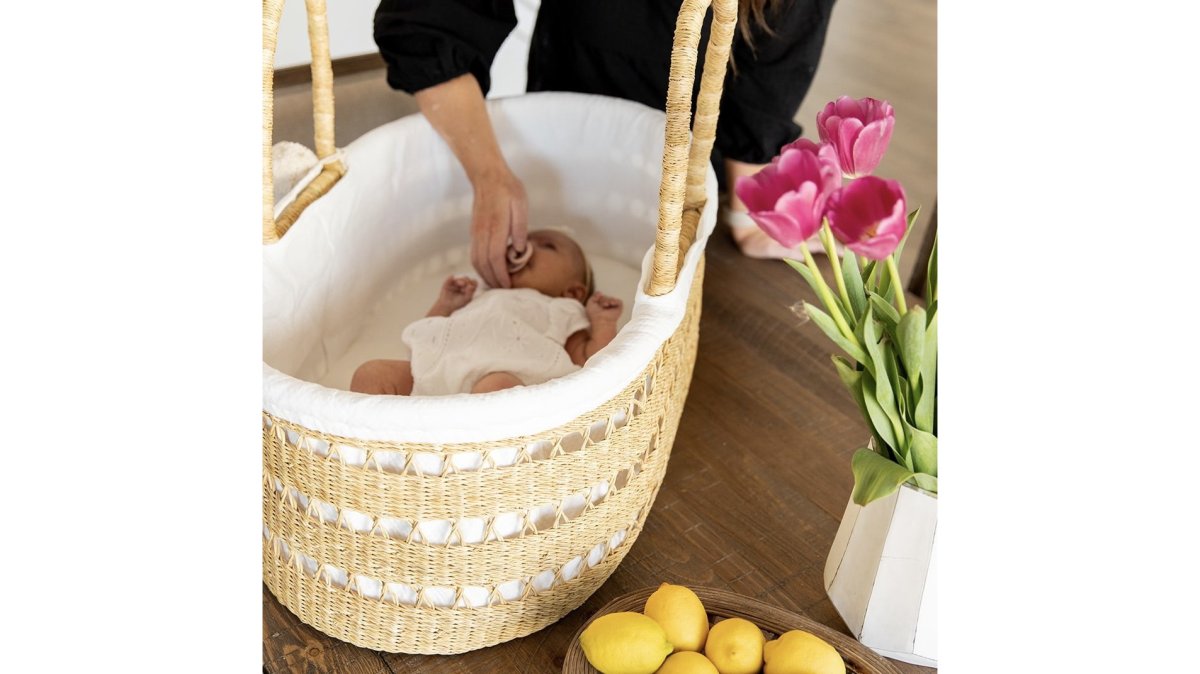
How to Place a Baby in a Moses Basket Safely
Table of Contents
- Understanding Your Moses Basket Before You Begin
- Preparing Your Sleep Environment and Positioning Near Your Bed
- Step-by-Step: How to Place a Baby in a Moses Basket
- Moses Basket Safe Sleep Guidelines for Your Newborn
- What to Put in a Moses Basket for a Newborn
- When to Stop Using a Moses Basket
- What to Do If Your Baby Won't Sleep in Moses Basket
- Frequently Asked Questions
Last Updated: October 18, 2026
Understanding Your Moses Basket Before You Begin
A Moses basket is a portable sleep space for newborns and young infants who cannot yet sit up or roll over, and understanding how to place a baby in a Moses basket? is essential for safe, confident sleep. At Plum+Sparrow, understanding your basket, how it's built, what it contains, and whether it's safe, is the first step toward confident, peaceful sleep.
These handwoven baskets create a cozy, womb-like environment that helps newborns feel secure and close to you. Before you place your baby inside, inspect every part of the basket and its setup, a simple step that prevents problems later.
Inspecting the Basket, Mattress, and Stand
Check the basket for sharp edges, splinters, or loose weaving that could catch fabric or skin. Run your hands along the interior and exterior.
Examine the mattress: it should be firm and flat, fitting snugly with no gaps around the edges. Press down with your hand, a good mattress doesn't compress easily. Soft mattresses don't provide the support newborns need for safe sleep.
If you're using a stand, make sure all legs are stable and level. Rock the basket gently side to side, it should feel solid, not wobbly. Tighten any bolts or connections if needed.
Check all hardware, handles, straps, and attachment points for looseness or damage. Test the handles by gently lifting the basket (without your baby inside) to confirm they're secure.
Setting Up Your Sleep Space
Place your Moses basket on its stand beside your bed at mattress height, or use a bedside crib stand designed for this purpose. It should be close enough to reach your baby without getting out of bed, but positioned so it can't slide or tip toward you overnight.

Keep the floor beneath the stand level and clear of obstacles, including rugs or items that could cause tripping in low light.
Keep the space around the basket completely clear, no pillows, blankets, bumpers, or stuffed animals. Your baby doesn't need them, and they increase risk. The basket itself provides the cozy feeling your newborn needs.
Position a nightlight or small lamp nearby so you can see your baby without bright overhead lights, keeping you calm and your eyes adjusted during nighttime care.
Preparing Your Sleep Environment and Positioning Near Your Bed
Your environment sets the tone for how smoothly placing your baby goes. A calm, prepared space makes the process feel natural, whether it's your first time or your hundredth.
Dim the lights in your bedroom, soft lighting helps you stay relaxed and helps your baby transition to sleep. Keep the room around 68-72 degrees Fahrenheit, which works well for most newborns.
Have everything within arm's reach before you pick up your baby, a clean diaper, wipes, a sleep sack, or a light blanket if you're using one, so you're fully prepared for how to place a baby in a Moses basket?
Wear comfortable, loose clothing so you can move freely and see your baby as you lower them in. Avoid bulky sweaters or jewelry that might catch on the weaving.
Position yourself on the edge of your bed or standing beside the basket, feet firmly on the ground with good balance. Never place your baby from an awkward position or while sitting in a way that makes bending difficult.
Step-by-Step: How to Place a Baby in a Moses Basket
Learning how to place a baby in a Moses basket safely takes practice, but the steps are straightforward. Most parents feel confident after a few attempts.
Getting Ready to Place Your Baby
Pick up your baby slowly, supporting their head with one hand and their bottom with the other. Hold them close to your chest for a moment, this helps them feel secure and gives you a chance to check that you're ready.
Confirm the mattress is in place, the sleep space is clear, and the basket hasn't shifted. Take a breath.

The Gentle Lowering Technique
Lower your baby into the basket bottom-first, leading with their feet and legs. Keep your hands supporting their head and body as you bend forward slightly. Move slowly and deliberately, rushing increases the chance of jostling your baby.
Once their bottom and legs are in, gently lower their upper body, keeping one hand supporting their head until they're settled. Your other hand can steady them against the side of the basket.
When your baby is fully in the basket, keep your hands nearby for a few seconds so they can adjust. Many babies startle slightly when they feel the mattress beneath them, completely normal.
Slowly remove your hands, starting with the one supporting their head. Move away gradually rather than pulling back suddenly, this gentle transition helps your baby stay calm.
Transferring a Sleeping or Drowsy Baby
Transferring a sleeping baby requires extra care because sudden movement can wake them. Keep your hands in contact with your baby for as long as possible during the transfer.
Hold your sleeping baby against your chest with both hands supporting their head and bottom.
Once your baby rests on the mattress, keep your hands on their chest and belly for several seconds. This gentle pressure helps them feel secure and often prevents the startle reflex.
If your baby begins to stir, pause and keep your hands still. Wait for them to settle before continuing. Some babies need 10-15 seconds of gentle hand contact after being placed.
Remove your hands only when your baby is clearly relaxed and settled. If they startle or cry as you're pulling away, return your hands immediately and start over. There's no rush.
Moses Basket Safe Sleep Guidelines for Your Newborn
Safe sleep practices are just as important as the physical setup of your basket. Understanding these guidelines helps you feel confident that your baby is sleeping safely.
Back Sleeping Position and Safe Sleep Space
Always place your baby on their back for sleep (the CDC). This position is safest for newborns and reduces the risk of sleep-related complications.
Keep the sleep space inside the basket completely empty. Your baby needs only a firm mattress and a fitted sheet.
If you're using a sleep sack or wearable blanket, that's fine, it keeps your baby warm without loose fabric in the sleep space.
Check that nothing from outside the basket can fall into it. This includes your hair, bedding from your own bed, or clothing.
Position your baby's head in the center of the mattress, not turned to one side. Their arms can be at their sides or across their chest.
Watch for signs that your baby might be getting too warm. Overheating is a concern with baskets because they're cozy spaces.
What to Put in a Moses Basket for a Newborn
Knowing what belongs in your basket, and what doesn't, keeps your baby safe and comfortable. Less is actually more when it comes to Moses basket setup.
Your basket should include a firm, flat mattress that fits snugly.
If you're using a sleep sack, choose one that fits your baby's size. It should be snug around the neck and armholes so your baby can't slip down inside it.
Some parents like to add a small, breathable liner to the basket for easy washing.
That's it. Your basket is complete. Everything else, pillows, blankets, bumpers, wedges, and sleep positioners, should stay out of the basket. These items aren't necessary and can create safety concerns.
If your baby needs elevation because of reflux or congestion, talk with your pediatrician about safe options.
A simple setup with just a mattress, fitted sheet, and sleep sack works beautifully for most newborns. If your baby has special needs, your pediatrician can guide you toward the safest sleep solution for them.
When to Stop Using a Moses Basket
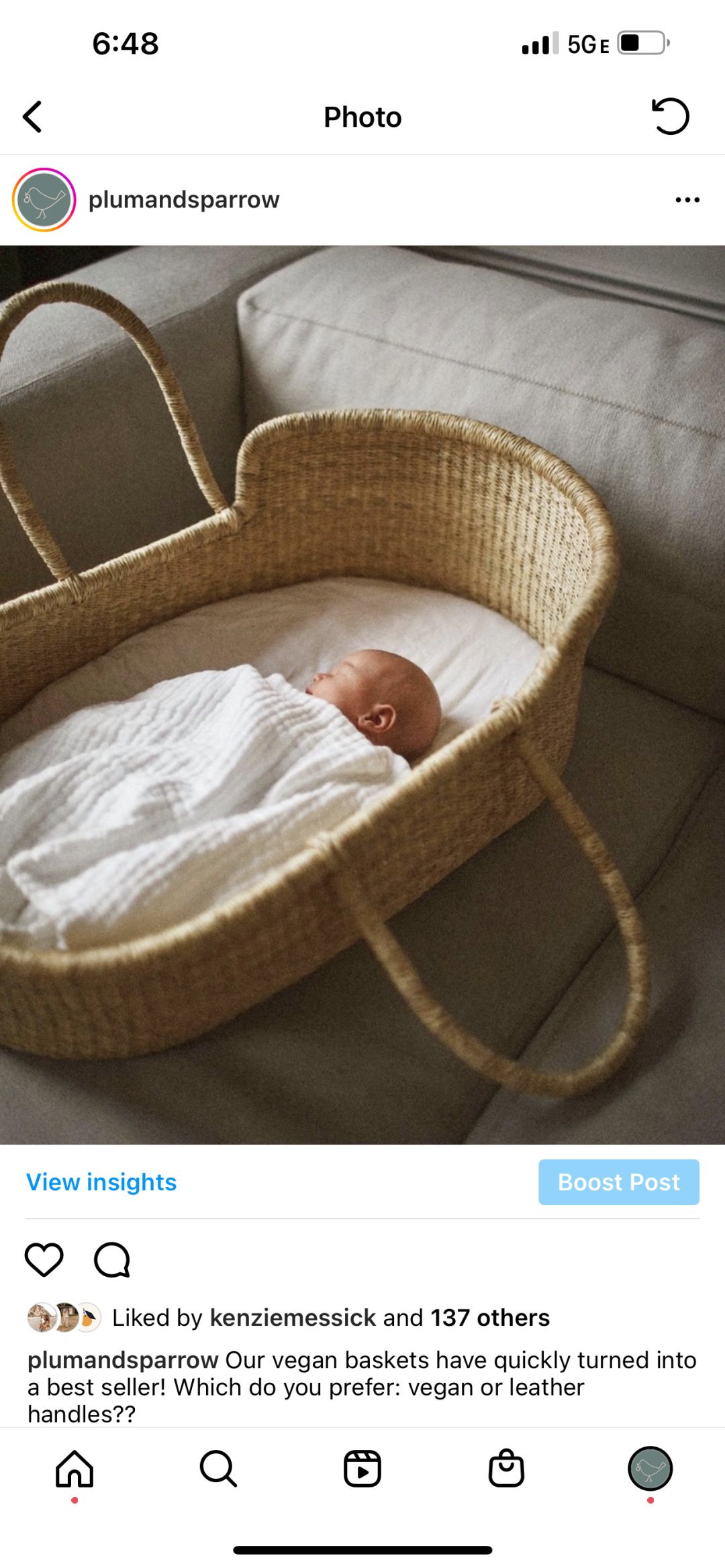
Moses baskets are designed for newborns and young infants who can't yet roll over or sit up on their own. As your baby grows and becomes more mobile, the basket becomes less appropriate.

Most babies outgrow their Moses basket around 5-6 months of age, though this varies.
When your baby starts rolling, a Moses basket is no longer safe because they could roll into the sides.
Don't feel rushed to transition before your baby shows these signs. If your baby is still small and happy in the basket, and they're not rolling yet, the basket is still appropriate.
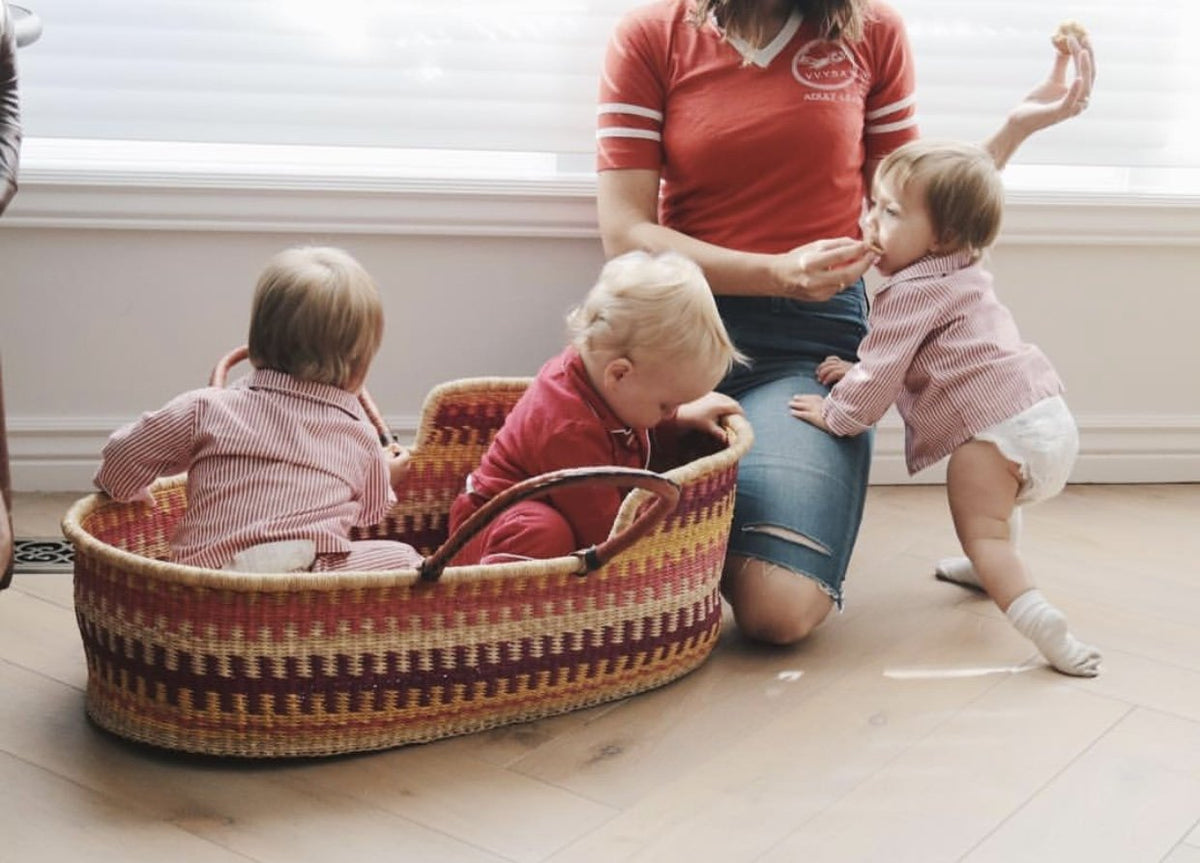
After your baby outgrows the basket for sleep, you can repurpose it throughout your home. Use it for storing blankets, toys, books, or nursery supplies.
What to Do If Your Baby Won't Sleep in Moses Basket
Some babies take to their Moses basket immediately. Others need time to adjust, or they may simply prefer a different sleep space.
If your baby cries when you place them in the basket, pause and assess.
If your baby is fed, dry, and comfortable but still crying, try holding them for a few minutes before attempting placement again.
Some babies sleep better in a basket that's positioned differently. Try moving it slightly closer to your bed or adjusting the angle.
If your baby consistently won't sleep in the basket, it may not be the right sleep space for your family right now.
Don't force a solution that isn't working.
If sleep challenges continue, talk with your pediatrician.
Placing your baby safely in a Moses basket is about combining a few simple techniques with a calm, prepared environment.
At Plum+Sparrow, we design our handwoven Moses baskets to support this journey. When you're ready to welcome your newborn into a thoughtfully designed sleep space, our collection of Moses baskets is here to support you.
Frequently Asked Questions
What is the safest position for a baby in a Moses basket?
Your baby should always be placed on their back to sleep in a Moses basket. This position reduces the risk of sudden unexplained infant death. Keep your baby's face uncovered and their feet toward the foot of the basket. Avoid placing pillows, blankets, bumpers, or other soft objects in the sleep space, these can pose risks. A firm, flat mattress with a fitted sheet is all your newborn needs for safe sleep.
How long can a baby use a Moses basket?
Most babies use a Moses basket from birth until they begin to roll over or sit up unaided, typically around 4 to 6 months. Some babies outgrow their basket sooner if they become more mobile or reach the weight limits set by the manufacturer. Always check your basket's guidelines and watch for signs your baby is becoming too active for the space. Once your baby transitions out, your handwoven basket can be repurposed for storage around your home.
Can you move a Moses basket while the baby is inside?
Yes, you can move a Moses basket with your baby inside, and that's one of its key benefits. The portable design allows you to keep your newborn close throughout your home. Always ensure the basket is on a stable, level surface before placing your baby in it. If you need to carry the basket, use both handles firmly and move slowly and carefully to avoid jostling your baby awake. Never move the basket on stairs or uneven ground.
What should you put in a Moses basket for a newborn?
Your Moses basket should contain only a firm, flat mattress with a fitted sheet designed for the basket's size. A handwoven basket like those from Plum+Sparrow comes with a custom-fit mattress included. Do not add pillows, blankets, bumpers, toys, or sleep positioners, these items increase the risk of suffocation or entanglement. The basket itself provides a cozy, womb-like environment without extra padding or soft objects.

Leave a comment
This site is protected by hCaptcha and the hCaptcha Privacy Policy and Terms of Service apply.